Goals and Objectives of the Career Intelligence project
Measure AI-Maturity – Exploit the potential of AI solutions for SMEs
» Systematic practical approaches for SMEs
The Digital Intelligence project focuses on how small and medium-sized enterprises (SMEs) can be supported in implementing AI solutions. The aim is to fully exploit the potential of AI solutions to the greatest extent as possible and as practical in order to improve the competitiveness of SMEs.
One of the biggest challenges in using AI solutions is their situation-specific integration into the respective context. Therefore, the project aims to develop and enhance the necessary reflective skills for the professional integration of AI solutions within the relevant organizational context.
Furthermore, the EU project aims to promote the attractiveness of vocational education and training. Learning and research factories, which can become part of the respective ecosystem of corporate training, are assigned a special role in this context.
The aim is to develop and establish the appropriate learning architecture to promote digital transformation, among other things with the help of cooperation networks.
» Key areas of focus
To achieve the goals mentioned before, the project focuses on three key areas.
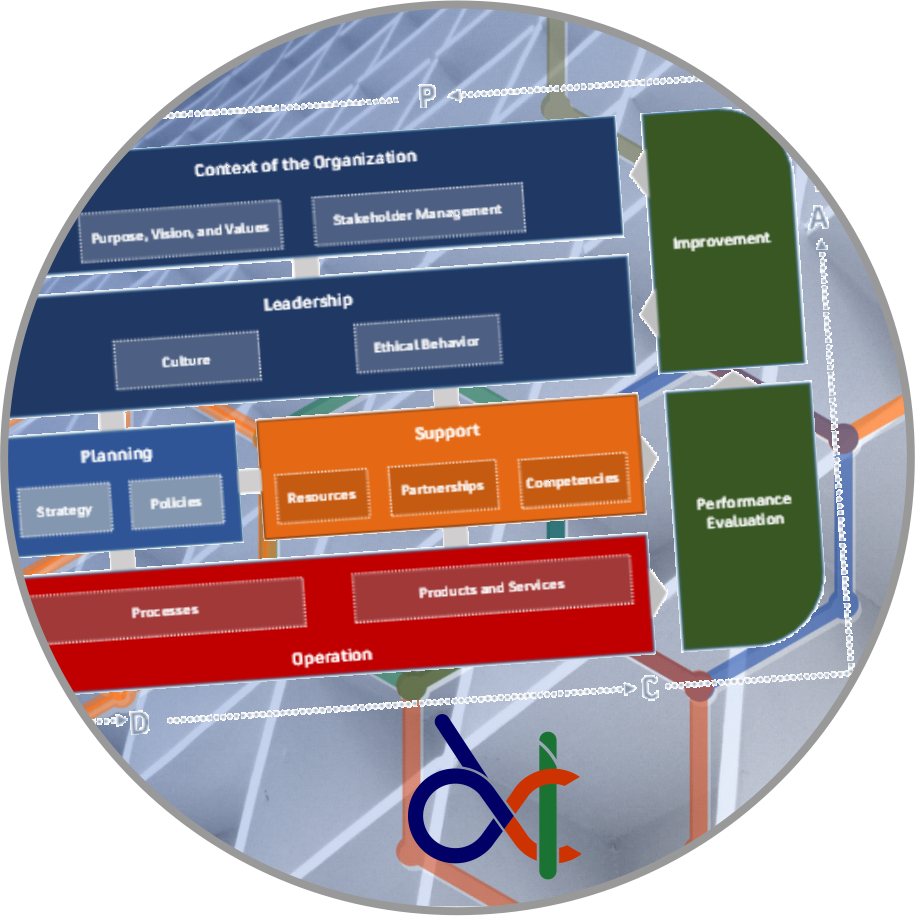
The first involves the (further) development of an AI maturity model. In this context, reference is made to the challenges involved in establishing AI solutions in the field of industrial production as well as in the service sector.
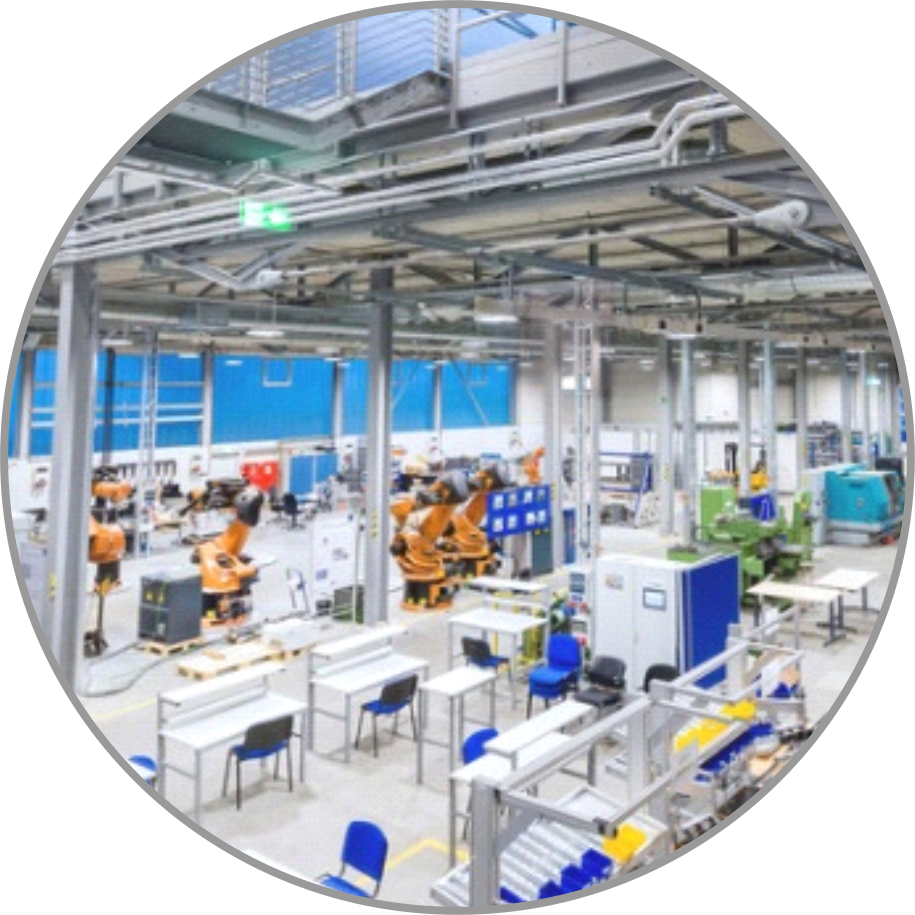
A second area of focus is the further development of the learning and research factory concept. This is being carried out in close collaboration with the learning and research factories at Grenoble University (France), Budapest University (Hungary), and Ruhr University Bochum (Germany).
In this context, the focus lies, over and beyond, on the question of how to teach AI. The CRISP-DM framework plays a central role as a structuring approach for AI learning units. The corresponding process model distinguishes between the following six phases: 1. Business Understanding, 2. Data Understanding, 3. Data Preparation, 4. Modelling, 5. Evaluation, and 6. Deployment. In this context, the EU project also deals with the use of AI-based learning and assistance systems that rely on motion and observation sensors, among other things.
The third major focus of the EU project is the further development of the role of the Digital Coach (DC). A distinction can be made between internal and external DCs. While an internal DC is a member of an organization or company, an external DC is, for example, a member of a Chamber of Industry and Commerce (IHK), an economic development agency, or an educational institution, offering relevant services to businesses.
Based on the promoter approach of innovation research, the DC is assigned the role of process promoter. Besides, the DC’s qualification takes place in close collaboration with teaching and learning activities in the learning and research factories. In this context, reference is made to the requirement that the qualification programme for the DC be conceptually designed and organized in a way that ensures effective knowledge transfer. To ensure that individuals who wish to take on the role of DC are appropriately qualified or can qualify themselves, self-learning modules on the following topics are being developed within the framework of the EU project.
A list and description of the self-learning modules can be found here .